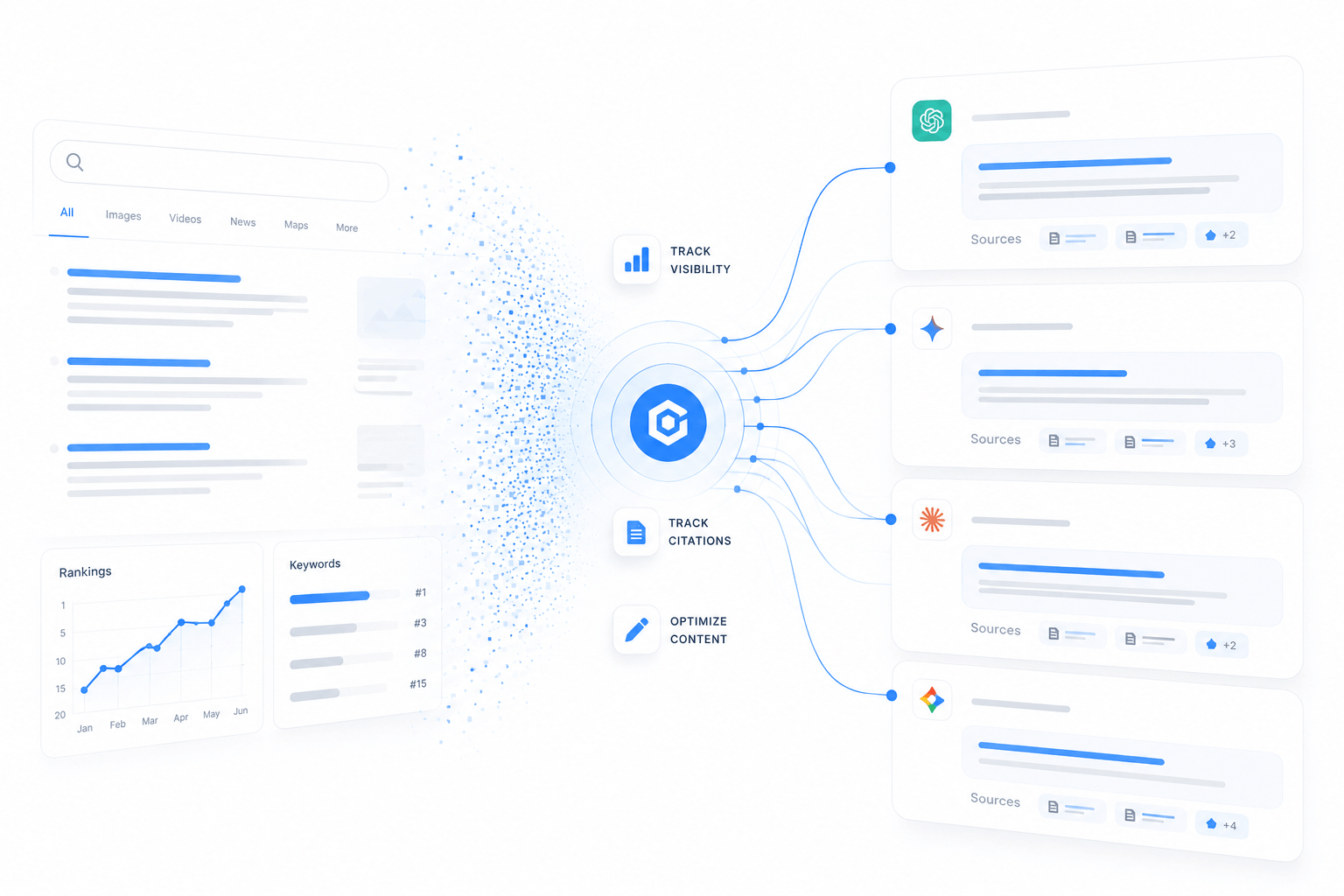
For over two decades, the digital marketing world has revolved around a single, predictable axis: the search engine results page. Success was measured by blue links and the ability to rank in the top three positions for specific keywords. However, the rise of Large Language Models like GPT-4, Claude, and Gemini has fundamentally altered this landscape. We are moving away from simple keyword matching and toward a new era of contextual intent satisfaction. This shift has birthed a new discipline known as Generative Engine Optimization (GEO).
Generative Engine Optimization is the strategic process of ensuring your brand is the preferred answer within AI-generated responses. While traditional SEO focuses on visibility in search engines like Google or Bing, GEO focuses on visibility within the conversational interfaces of LLMs. In this new paradigm, the goal is not just to be found by a crawler, but to be synthesized and cited by an intelligent agent. This requires a transition from optimizing for technical signals to building deep brand authority that AI models can trust.
Traditional ranking factors are evolving. Backlinks and site speed still matter, but they are increasingly serving as secondary signals for brand authority. AI models prioritize information that is verifiable, authoritative, and contextually relevant to the user’s specific query. To succeed in this environment, marketers must understand that they are no longer just competing for a spot on a list. They are competing to be the primary source of truth for an AI’s generative output.
How AI Overviews and LLMs Process Information Differently than Traditional Search
To master GEO, one must first understand the mechanics of Retrieval-Augmented Generation (RAG). Unlike traditional search engines that index pages and point users toward them, AI search engines use RAG to pull real-time data from the web and blend it with their internal training data. This allows the AI to provide a cohesive, conversational answer rather than a list of links. When a user asks a question, the model retrieves the most relevant snippets of information and weaves them into a single response.
This process has created what experts call the Citation Gap. It is a phenomenon where a website may rank in the top position on Google for a specific keyword but fail to appear as a cited source in a ChatGPT or Gemini response. This happens because LLMs do not just look for the most popular page. They look for the page that provides the most concise, accurate, and structured answer to the specific prompt. If your content is buried behind fluff or lacks clear factual density, the AI may bypass you in favor of a lower-ranking site that is easier to parse.
The introduction of Google AI Overviews has further complicated this dynamic. These summaries appear at the top of the search results, often pushing organic links far down the page. This shift is significantly impacting organic click-through rates. When a user receives a complete answer directly from the AI, the incentive to click through to a website diminishes. This creates a zero-click environment where the only way to maintain brand presence is to be the source the AI credits within its summary.
Actionable GEO Strategies: Securing Brand Citations in LLM Responses
To succeed in the age of AI SEO, businesses must adopt a data-driven approach to how they appear in generative results. This process is built on three core pillars, all of which are features of LLMFriendly.ai.
1. Start Tracking your AI Visibility
Traditional keyword rankings only tell part of the story. You must measure your visibility to understand how frequently your brand is recommended across different LLMs like ChatGPT, Claude, and Gemini. By monitoring these metrics, you can identify whether your brand is gaining or losing ground in the conversational search landscape.
2. Track your prompt citations to understand what AI is citing
It is crucial to know which specific articles, data points, or pages are being used as sources by AI models. Understanding these citations allows you to see what the AI considers authoritative. This insight helps you identify the gap between your top-performing search pages and the content that AI actually trusts and references.
3. Update your website and blog to reflect that learnings
GEO is an iterative process. Once you have data on your visibility and citations, you must refine your content strategy. This involves optimizing your site structure and factual density to better serve the needs of generative engines. By continually updating your digital assets based on performance data, you ensure your brand remains a primary source of truth for AI agents.
AI SEO vs. Traditional SEO: Key Differences and Strategic Synergies
The transition to AI-driven search does not mean traditional SEO is dead, but it does mean the focus has shifted. In traditional SEO, Link Equity was the primary currency. The more high-quality backlinks you had, the more “votes” you had in the eyes of the search engine. In AI SEO, the focus is on Semantic Relevance. AI models look at how closely the meaning of your content aligns with the user’s intent. They evaluate the vector space between the query and your content to determine if you are a topical match.
Another major difference lies in the nature of the queries themselves. Traditional SEO was built on short-tail keywords like “best coffee maker.” AI search is driven by long-tail, conversational queries such as “what is the best coffee maker for a small apartment that also has a built-in grinder?” These queries are more specific and require content that can handle complex, multi-layered questions. Marketers must move away from targeting isolated words and start targeting complete user journeys and conversational paths.
Balancing content for three different audiences is now a requirement for modern digital strategy. You must write for human readers who want engaging stories, traditional crawlers that need technical signals, and generative model scrapers that need structured, factual data. While this may seem daunting, the synergies are clear. High-quality, authoritative content that satisfies a human reader is often exactly what an LLM wants to summarize. By focusing on depth and clarity, you can satisfy all three audiences simultaneously.
Measuring Success: Tracking Share of Model and AI Visibility Metrics
Traditional metrics like keyword rankings and organic traffic are becoming less reliable as the sole indicators of success. In the era of GEO, marketers need to monitor their Share of Model. This metric tracks how often your brand is mentioned or recommended across various LLMs like ChatGPT, Perplexity, and Gemini. It is the AI equivalent of Share of Voice.
If a user asks for a recommendation in your industry and the AI consistently mentions your competitor instead of you, your traditional SEO rankings may not matter in the long run. Evaluating the business impact of zero-click searches is also essential. Even if a user does not click through to your website, being the cited source in an AI summary builds significant brand equity. It positions your company as the ultimate authority in the mind of the consumer.
To track this, brands are beginning to use specialized tools to audit how their content is being perceived by AI. Using LLMFriendly allows businesses to measure their AI Visibility and understand how well their current domain architecture aligns with the needs of generative models.
Monitoring these metrics requires a shift in mindset. Instead of just looking at a dashboard of clicks, you must look at the quality and sentiment of the AI’s responses regarding your brand. Are the models accurately describing your services? Are they citing your most recent data? By auditing these responses, you can identify gaps in your content strategy and refine your GEO approach to ensure your brand remains at the forefront of the conversational search revolution.
Future-Proofing for 2025: Multimodal Search and Personalized AI Agents
As we look toward 2025, the scope of AI SEO will expand beyond text. We are entering the age of multimodal search, where AI models will retrieve and synthesize information from video, images, and audio data. This means that your GEO strategy must include optimizing your visual and auditory assets. Alt text, video transcripts, and descriptive metadata will become critical components of how an AI understands your brand’s full story. If an AI can see your product in a video and hear your expert explain it in a podcast, its confidence in your authority will grow.
The rise of personalized AI agents will further change the discovery phase of the marketing funnel. These agents will not just answer questions. They will perform tasks, make purchases, and manage schedules on behalf of the user. To be the brand that an agent selects, your data must be incredibly easy for an AI to access and trust. This is where the foundation of brand authority becomes a competitive advantage. LLMFriendly provides the framework for building this authority, ensuring that your brand is ready for a world where agents, not just humans, are making the decisions.
Future-proofing your strategy means staying ahead of these technological shifts. The brands that will dominate the next decade are those that stop viewing search as a static list of results and start viewing it as a dynamic, intelligent conversation. By prioritizing information gain, structured data, and semantic relevance, you can ensure that your brand is not just a result on a page, but a fundamental part of the AI’s knowledge base. The transition to GEO is an opportunity to redefine your brand’s digital presence for the modern age.
Conclusion
The transition from traditional SEO to Generative Engine Optimization represents one of the most significant shifts in the history of digital marketing. As AI models like ChatGPT, Claude, and Gemini become the primary gateways to information, the old rules of keyword stuffing and link building are no longer enough. Success in 2025 and beyond requires a deep commitment to brand authority, unique information gain, and technical LLM compatibility. You must ensure that your brand is not just visible, but preferred by the algorithms that now guide human decision-making.
Navigating this new landscape can be complex, but you do not have to do it alone. Tools like LLMFriendly are designed to help you measure your AI Visibility and optimize your content for the generative era. By understanding how LLMs perceive your brand, you can make the necessary adjustments to secure your place as a cited authority in AI responses.
The future of search is conversational, intelligent, and generative. It is time to ensure your brand is ready to lead the conversation. Visit LLMFriendly today to start auditing your AI SEO strategy and future-proof your digital presence.
Track Your AI Visibility Today
See where your brand shows up in LLM responses and use those insights to improve your GEO strategy.
Start Tracking on Shopify